
Your ideal customer
Describe the stores you want
Your agent can only find what you describe. A vague ideal customer brings vague stores; a precise one brings shops where your products already make sense. Here is what to write.
A weak description and a strong one
Shops that sell kids’ clothes.
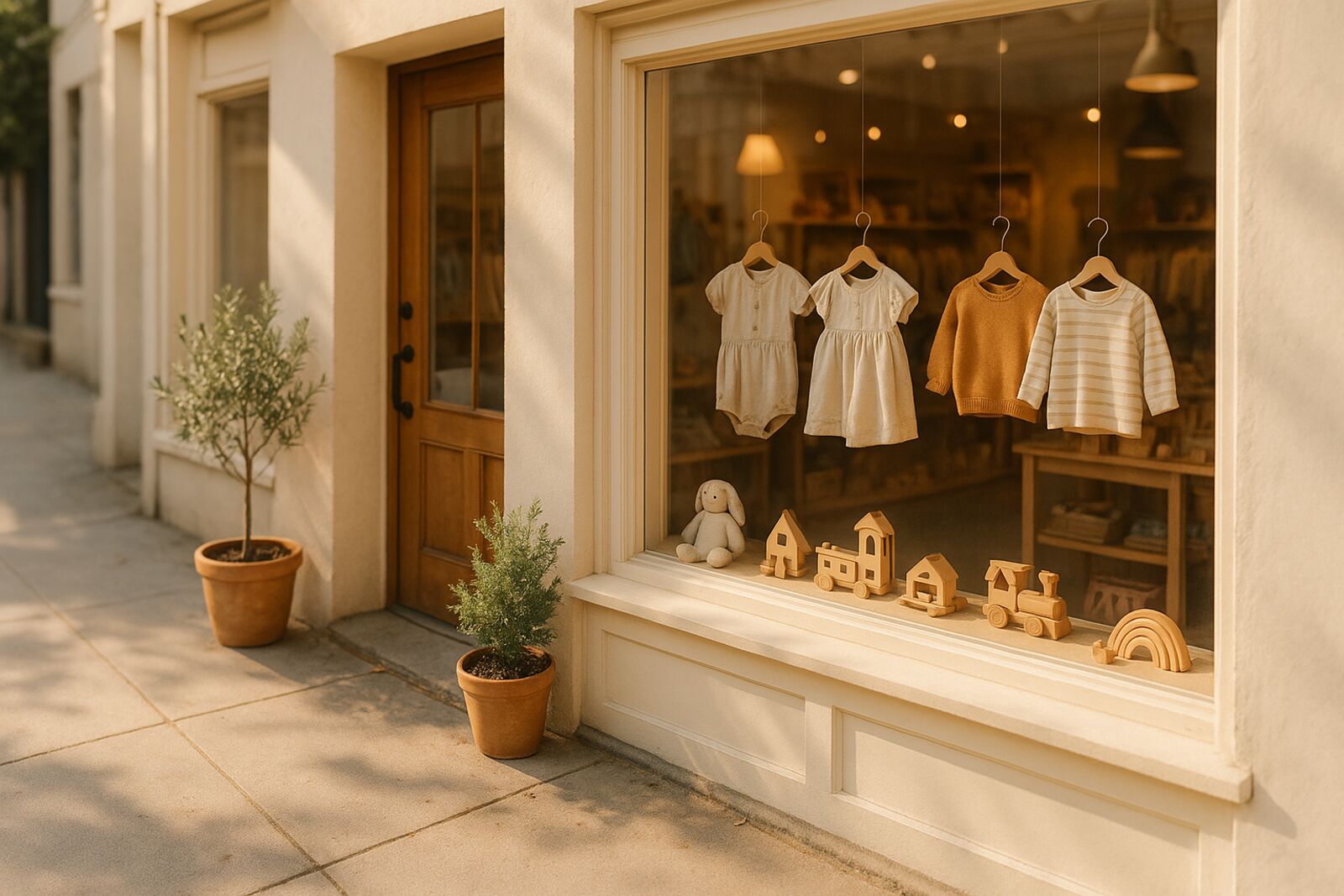
Independent children’s boutiques with a shop front and a website, selling clothing for ages 0 to 6 in natural fabrics, at mid to premium prices. No department stores, no discount chains, no shops that only sell second hand. Like these three: [three shops you admire].
The second one tells the agent the kind of store, the niche, the price level, what to leave out and what a good match looks like. Every store it finds then comes with a line that says why it fits, so you can see at once whether the description is working.
The fields, one by one
- Store type. Boutique, gift shop, pet store, outdoor store, wholesaler. This also decides which specialist agent takes the job.
- Niche. What they focus on: organic baby clothes, handmade home goods, premium dog treats.
- Area. The country of the agent, and, if you want, the states, provinces or cities that matter to you.
- Size. Single shops, small groups of two to ten stores, or larger.
- Signs that a store fits. Things you could see on their website: they stock similar brands, they sell at your price level, they mention “local makers”.
- Exclusions. What the agent must never propose: chains, marketplaces, competitors, a region you already cover with a distributor.
- Three to five example stores. The most useful field of all. Real shops you would love to be in teach the agent your taste better than any description.
One ideal customer per kind of store
If you sell to two very different kinds of shops, say gift shops and garden centres, do not mix them in one description. Create two ideal customers: each gets its own specialist, its own search and its own email, and the report shows you which one works better.
Let the results teach you
Look at the first stores your agent finds. If a shop does not fit, its “why it fits” line tells you what the agent understood, and you know what to correct: add an exclusion, sharpen the niche, change an example. You can also review your description with Katya: she reads it with your website and suggests improvements, and you accept each one or not.
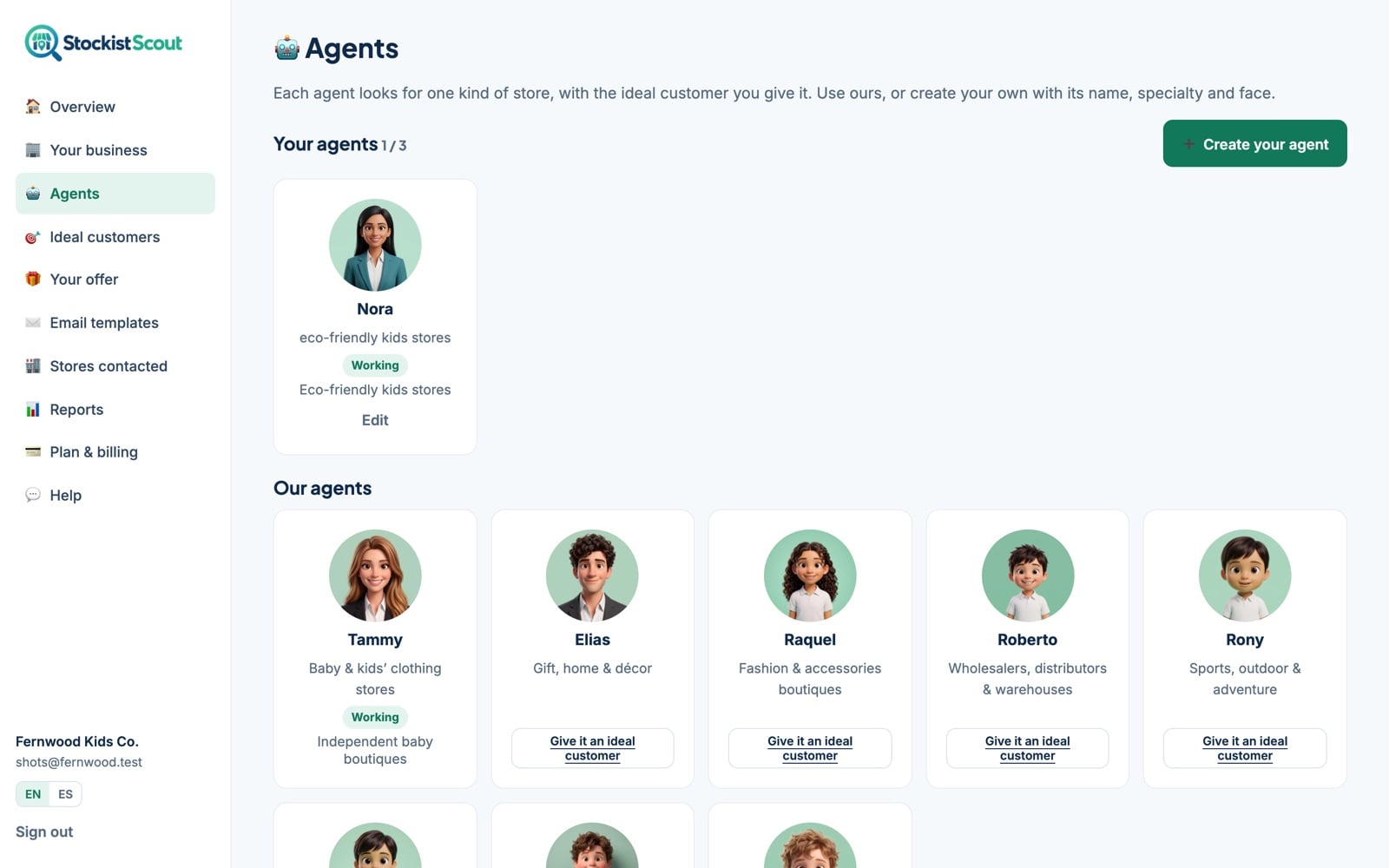
Meet the eight specialists, or create your own agent for a kind of store that is not on the list.
Keep reading

Selling to stores in another country: a factory in China finding US shops
Your business can be anywhere and your agent writes to stores in another country, in their language. A worked example: a ceramics factory in China looking for its first US stockists, with the numbers of each month.

How an agent finds stores for your brand, step by step
One example from start to finish: a ceramics studio describes what it sells and who it wants, its agent finds gift shops that fit, writes to each one and the replies land in the studio's inbox.
What to put in your wholesale offer: minimum order, terms, samples and a first-order offer
The five answers a store buyer looks for in a first email from a new brand, with examples of each, and the mistakes that cost replies.